Mercantilism
Mercantilism became popular in Europe in the 1500s and was the primary reason behind Europe’s desire to colonize new lands.
The theory of mercantilism states that there is a certain amount of wealth and riches in the world and that it is in a nation’s best interest to accumulate it. Through wealth, a nation can achieve power. A country achieves wealth by producing and exporting more goods than it imports (having a favorable balance of trade). These manufactured goods must be sold at a profit for wealth to accumulate.
Profits are made when a country spends a small amount of money on raw materials needed to create a product and sells the manufactured goods for a high price. It is easy to see how a new colony in North America would be the perfect place for Europeans to find a steady supply of new raw materials. Here's an example. England would buy New England lumber for a very low price. They would take that lumber to England, build a ship, and then sell it back to the colonists for a high price.
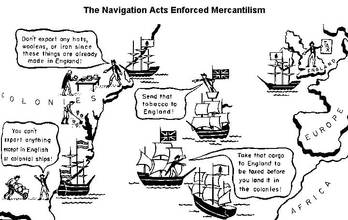
Mercantilism was meant to serve the interests of the empire, not the colony. Colonies existed for the benefit of the mother country. Colonies could not sell their raw materials to anyone but the mother country England, and they were not allowed to manufacture anything to export.
Rules of Mercantilism
Between 1651 and 1673, the English Parliament passed four Navigation Acts meant to ensure the proper mercantilist trade balance. The acts declared the following:
The theory of mercantilism states that there is a certain amount of wealth and riches in the world and that it is in a nation’s best interest to accumulate it. Through wealth, a nation can achieve power. A country achieves wealth by producing and exporting more goods than it imports (having a favorable balance of trade). These manufactured goods must be sold at a profit for wealth to accumulate.
Profits are made when a country spends a small amount of money on raw materials needed to create a product and sells the manufactured goods for a high price. It is easy to see how a new colony in North America would be the perfect place for Europeans to find a steady supply of new raw materials. Here's an example. England would buy New England lumber for a very low price. They would take that lumber to England, build a ship, and then sell it back to the colonists for a high price.
Mercantilism was meant to serve the interests of the empire, not the colony. Colonies existed for the benefit of the mother country. Colonies could not sell their raw materials to anyone but the mother country England, and they were not allowed to manufacture anything to export.
Rules of Mercantilism
Between 1651 and 1673, the English Parliament passed four Navigation Acts meant to ensure the proper mercantilist trade balance. The acts declared the following:
- Only English or English colonial ships could carry cargo between imperial ports.
- Certain goods, including tobacco, rice, and furs, could not be shipped to foreign nations except through England or Scotland.
- The English Parliament would pay “bounties” to Americans who produced certain raw goods, while raising protectionist tariffs on the same goods produced in other nations.
- Americans could not compete with English manufacturers in large-scale manufacturing.
- The mother country (England) must have a favorable balance of trade.
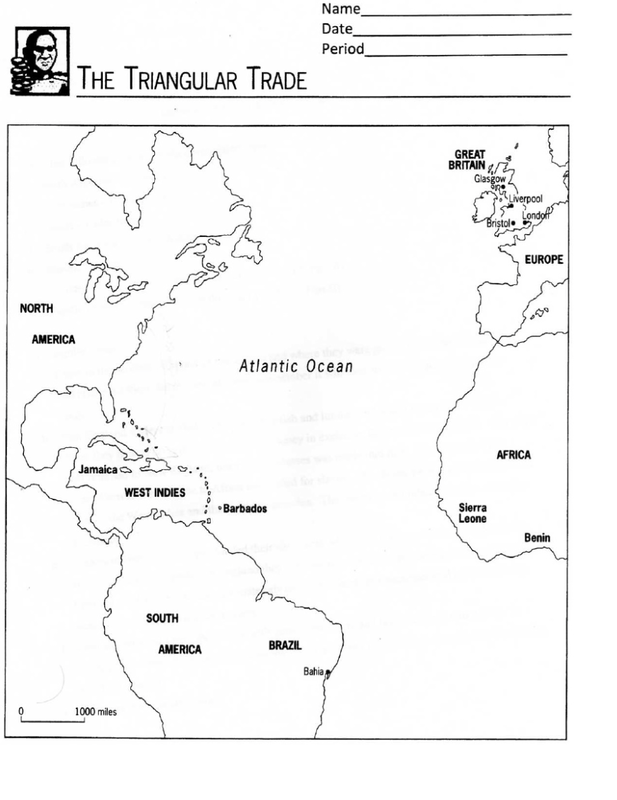
Triangular Trade
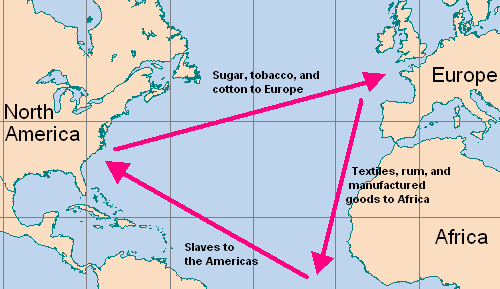
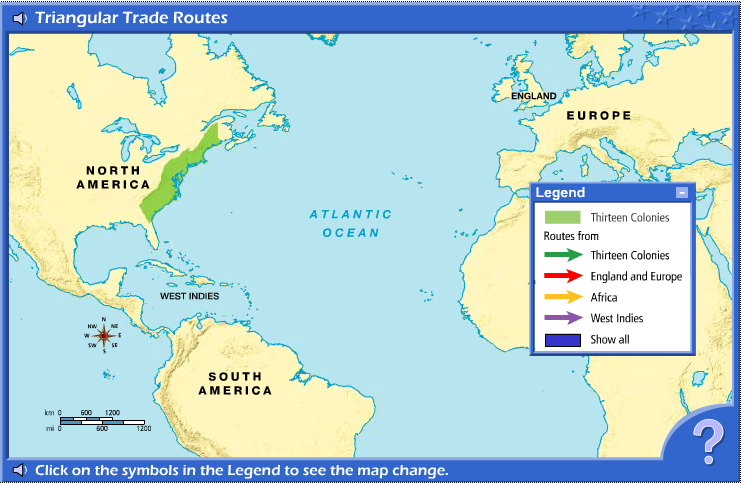
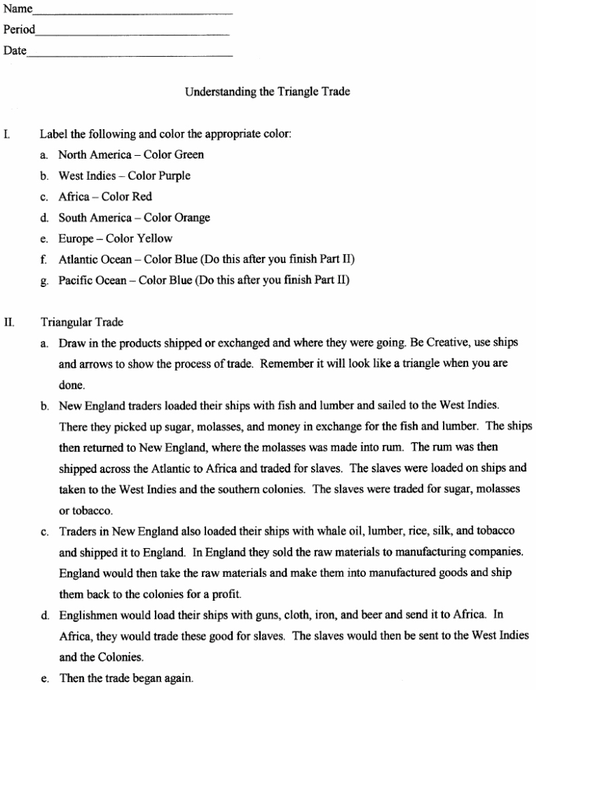
Triangular Trade
|
|
